
Modern healthcare facilities require advanced equipment that delivers reliability, smooth movement, and patient safety. Among the most important technologies used in modern patient care systems is the Hospital Bed Controller. Today, every advanced electric hospital bed system depends on a reliable Hospital Bed Controller for synchronized movement and stable operation.
A modern Hospital Bed Controller helps coordinate actuators, control boxes, patient handsets, and embedded wiring systems. As a result, hospitals can achieve better patient positioning, smoother movement, and improved caregiver efficiency.
At Polar Automation, integrated motion control solutions are designed to support reliable hospital bed operation through intelligent automation and synchronized movement systems. Furthermore, these technologies help improve long-term operational stability across ICU beds, rehabilitation beds, and advanced patient care equipment.
What Is a Hospital Bed Controller?
A Hospital Bed Controller is the central electronic unit responsible for managing and coordinating the movement functions of a hospital bed. In simple terms, the Hospital Bed Controller acts as the communication center between actuators, motors, handsets, and power systems.
Whenever a caregiver adjusts the bed position, the Hospital Bed Controller sends commands to the connected actuators. Consequently, the bed performs smooth and synchronized movement without instability.
Modern hospital beds include several movement functions such as:
- Backrest adjustment
- Leg-rest positioning
- Height adjustment
- Tilt positioning
- Patient repositioning
Therefore, a reliable Hospital Bed Controller becomes essential for maintaining safe and stable movement.
Without a proper Hospital Bed Controller, hospital beds may experience uneven positioning, unstable motion, or interrupted actuator communication. For this reason, integrated motion systems are increasingly important in modern healthcare environments.

Importance of Hospital Bed Motion Control Systems
Today, healthcare providers depend heavily on advanced hospital bed control system technology for patient comfort and operational efficiency.
Previously, many hospital beds relied on manual adjustment systems. However, modern automation technology has completely transformed hospital bed operation. As a result, hospitals can now improve patient handling while reducing caregiver workload.
A high-quality Hospital Bed Controller helps improve:
- Movement synchronization
- Patient safety
- Positioning precision
- Caregiver convenience
- Operational reliability
Additionally, integrated systems help reduce maintenance complexity and improve long-term durability.
Because hospital beds are used continuously in healthcare environments, reliable motion control becomes extremely important.
Role of Electric Linear Actuators in Hospital Beds
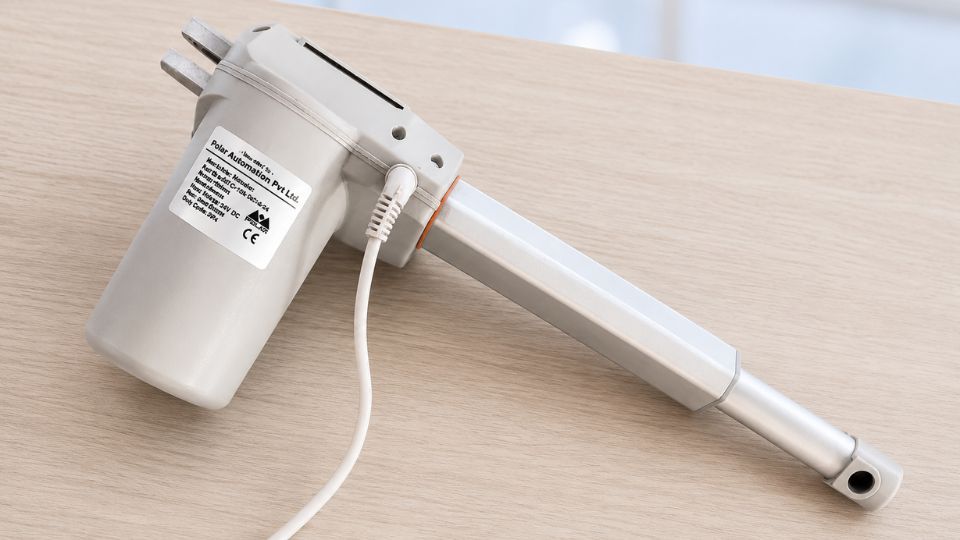
An electric linear actuator is responsible for converting electrical energy into linear movement. In hospital bed systems, actuators control functions such as lifting, reclining, and tilting.
For example, one actuator may control the backrest while another actuator controls leg positioning. Similarly, additional actuators may manage height adjustment and Trendelenburg movement.
Since multiple actuators operate together, proper synchronization is necessary. Otherwise, the bed may move unevenly or become unstable.
A reliable hospital bed linear actuator controller helps coordinate actuator communication efficiently. Consequently, hospitals can achieve smooth and synchronized movement across all bed functions.
Furthermore, integrated actuator systems help reduce mechanical stress. Therefore, they support long-term reliability in demanding healthcare environments.
Why Medical Bed Automation Is Important
Modern healthcare facilities are increasingly adopting advanced medical bed automation systems. As healthcare technology evolves, hospitals require intelligent systems that improve patient care and operational efficiency.
Automated systems allow caregivers to adjust bed positioning quickly and accurately. In addition, patients experience smoother and more comfortable movement.
A Hospital Bed Controller plays a major role in supporting this automation process. Moreover, it helps ensure reliable communication between all connected components.
Today, automated systems are widely used in:
- ICU beds
- Fowler beds
- Rehabilitation beds
- Home care beds
- Advanced patient care systems
Because of growing healthcare demands, automation technology continues to expand rapidly.
Common Challenges in Hospital Bed Systems
Although advanced hospital beds provide many advantages, several operational challenges can still occur. Therefore, integrated control systems are essential for reliable operation.
Movement Synchronization Issues
If actuators fail to communicate properly, the bed may move unevenly. As a result, patient comfort and safety may be affected.
Wiring Complexity
Modern hospital beds contain multiple electronic components. Consequently, wiring architecture can become complicated.
However, integrated systems help simplify internal wiring and improve signal organization.
Controller Instability
An unstable Hospital Bed Controller may cause delayed movement response or inconsistent positioning.
Therefore, hospitals require advanced control systems designed for continuous operation.
Difficult Diagnostics
Without centralized architecture, troubleshooting becomes more difficult and time-consuming.
Integrated systems help simplify diagnostics and maintenance procedures.
Long-Term Operational Stress
Hospital beds operate continuously in healthcare environments. Therefore, components must maintain reliable performance over long periods.
A high-quality Hospital Bed Controller helps improve long-term system durability.
Benefits of Integrated Motion Control Systems
Integrated motion systems provide several operational benefits for healthcare equipment manufacturers and hospitals.
Reliable Synchronized Movement
A modern Hospital Bed Controller helps maintain smooth and coordinated actuator movement. Consequently, patients experience stable and comfortable positioning.
Reliable synchronization also improves caregiver efficiency during patient handling.
Simplified Wiring Systems
Integrated architecture helps reduce wiring complexity and improve communication management.
As a result, maintenance becomes easier and system reliability improves.
Improved Patient Safety
Smooth movement coordination helps prevent sudden jerks and unstable positioning.
Therefore, integrated systems are highly beneficial for ICU and critical care environments.
Better Maintenance and Diagnostics
A centralized linear actuator controller helps technicians identify faults quickly and efficiently.
Consequently, hospitals can reduce downtime and improve servicing speed.
Long-Term Reliability
Integrated systems are designed for demanding healthcare applications. Therefore, they support stable performance over extended operating periods.
Because of this, hospitals can improve operational consistency and reduce maintenance costs.
ICU Bed Actuator System Applications
An advanced ICU bed actuator system requires accurate and reliable motion coordination. Since ICU patients require continuous care, stable positioning becomes extremely important.
A reliable Hospital Bed Controller helps ICU beds perform multiple movement functions safely and efficiently.
Additionally, integrated systems support:
- Emergency positioning
- Patient monitoring access
- Smooth movement transitions
- Improved caregiver handling
As healthcare automation continues to evolve, ICU systems are becoming more intelligent and efficient.
Importance of an Electric Hospital Bed System
A modern electric hospital bed system improves both patient comfort and caregiver productivity.
Furthermore, electric systems reduce manual effort and improve positioning accuracy.
Today, healthcare facilities depend on advanced electric hospital bed systems because they help improve:
- Patient mobility
- Caregiver efficiency
- Movement precision
- Operational safety
- Equipment durability
A reliable Hospital Bed Controller is one of the most important components within these systems.
Future Trends in Hospital Bed Automation
The future of healthcare equipment is strongly connected to intelligent automation and smart motion technology.
In the coming years, hospitals may increasingly adopt:
- Wireless control systems
- IoT-enabled monitoring
- Smart positioning technology
- Sensor-based automation
- Energy-efficient actuator systems
- Advanced synchronization technology
As a result, hospital bed systems will become smarter and more efficient.
Integrated motion systems will continue to play a major role in supporting advanced patient care solutions.
Why Choose Polar Automation
Polar Automation provides reliable automation and motion control solutions for modern healthcare applications.
The company focuses on advanced Hospital Bed Controller systems, synchronized actuator integration, and intelligent movement architecture.
Furthermore, Polar Automation supports healthcare equipment manufacturers with:
- Reliable actuator systems
- Intelligent control integration
- Simplified wiring architecture
- Long-term operational stability
- Advanced hospital bed automation solutions
These systems are suitable for ICU beds, rehabilitation beds, Fowler beds, and advanced patient care equipment.
Conclusion
A reliable Hospital Bed Controller is essential for safe, smooth, and synchronized hospital bed operation. As healthcare environments continue to evolve, integrated motion control systems are becoming increasingly important for patient comfort and operational efficiency.
By combining electric actuators, centralized control systems, intelligent wiring architecture, and synchronized communication, hospitals can improve movement precision and long-term reliability.
Furthermore, integrated automation systems help simplify maintenance, improve patient handling, and support advanced healthcare operations.
As a result, modern Hospital Bed Controller technology continues to play a major role in the future of hospital bed automation and patient care systems.
