Integrated Motion Control Systems for Reliable Hospital Bed Operation

Modern healthcare facilities require advanced equipment that delivers reliability, smooth movement, and patient safety. Among the most important technologies used in modern patient care systems is the Hospital Bed Controller. Today, every advanced electric hospital bed system depends on a reliable Hospital Bed Controller for synchronized movement and stable operation.

A modern Hospital Bed Controller helps coordinate actuators, control boxes, patient handsets, and embedded wiring systems. As a result, hospitals can achieve better patient positioning, smoother movement, and improved caregiver efficiency.

At Polar Automation, integrated motion control solutions are designed to support reliable hospital bed operation through intelligent automation and synchronized movement systems. Furthermore, these technologies help improve long-term operational stability across ICU beds, rehabilitation beds, and advanced patient care equipment.

What Is a Hospital Bed Controller?

A Hospital Bed Controller is the central electronic unit responsible for managing and coordinating the movement functions of a hospital bed. In simple terms, the Hospital Bed Controller acts as the communication center between actuators, motors, handsets, and power systems.

Whenever a caregiver adjusts the bed position, the Hospital Bed Controller sends commands to the connected actuators. Consequently, the bed performs smooth and synchronized movement without instability.

Modern hospital beds include several movement functions such as:

  • Backrest adjustment
  • Leg-rest positioning
  • Height adjustment
  • Tilt positioning
  • Patient repositioning

Therefore, a reliable Hospital Bed Controller becomes essential for maintaining safe and stable movement.

Without a proper Hospital Bed Controller, hospital beds may experience uneven positioning, unstable motion, or interrupted actuator communication. For this reason, integrated motion systems are increasingly important in modern healthcare environments.

Hospital Bed Controller

Importance of Hospital Bed Motion Control Systems

Today, healthcare providers depend heavily on advanced hospital bed control system technology for patient comfort and operational efficiency.

Previously, many hospital beds relied on manual adjustment systems. However, modern automation technology has completely transformed hospital bed operation. As a result, hospitals can now improve patient handling while reducing caregiver workload.

A high-quality Hospital Bed Controller helps improve:

  • Movement synchronization
  • Patient safety
  • Positioning precision
  • Caregiver convenience
  • Operational reliability

Additionally, integrated systems help reduce maintenance complexity and improve long-term durability.

Because hospital beds are used continuously in healthcare environments, reliable motion control becomes extremely important.

Role of Electric Linear Actuators in Hospital Beds
Hospital Bed Controller

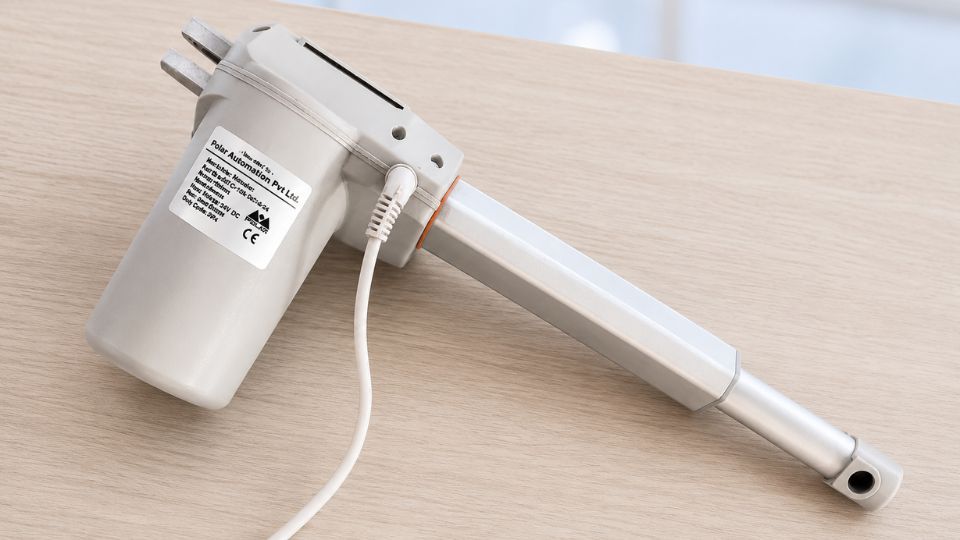
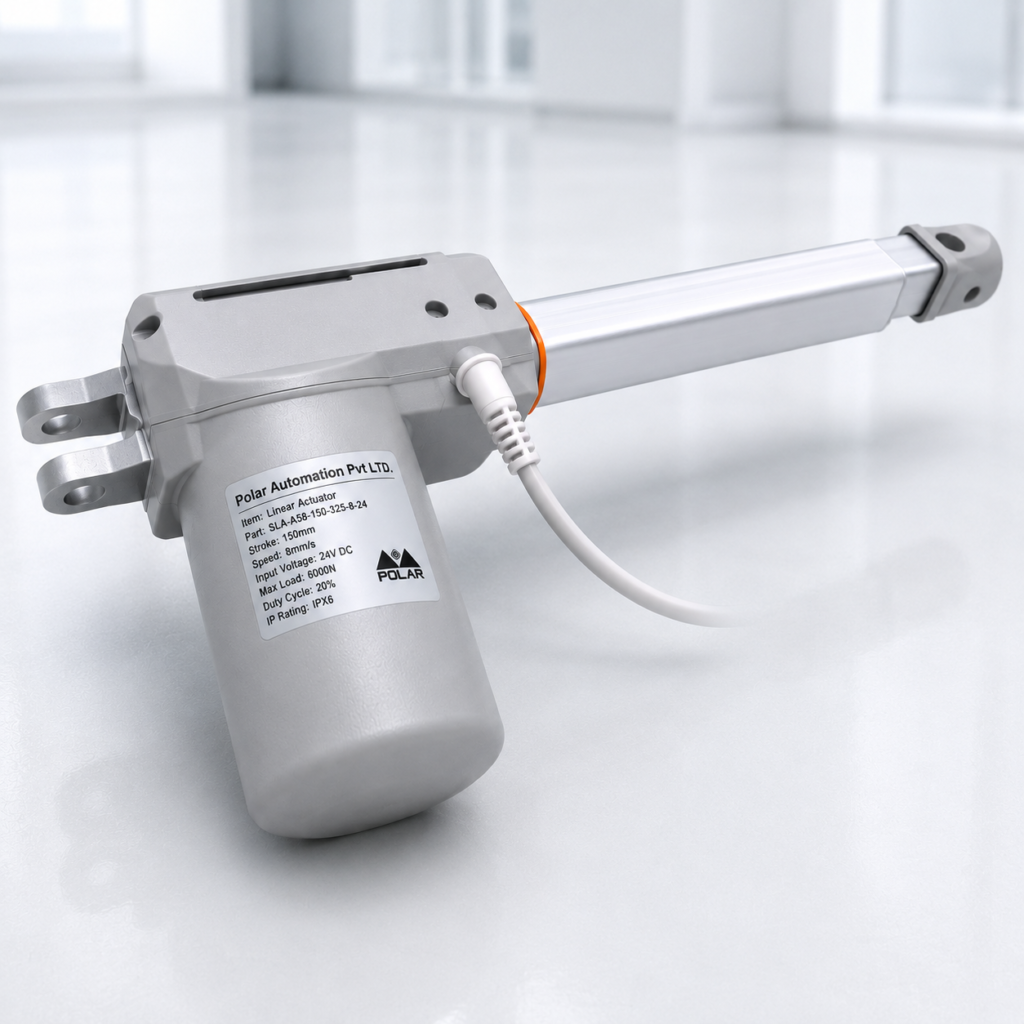
An electric linear actuator is responsible for converting electrical energy into linear movement. In hospital bed systems, actuators control functions such as lifting, reclining, and tilting.

For example, one actuator may control the backrest while another actuator controls leg positioning. Similarly, additional actuators may manage height adjustment and Trendelenburg movement.

Since multiple actuators operate together, proper synchronization is necessary. Otherwise, the bed may move unevenly or become unstable.

A reliable hospital bed linear actuator controller helps coordinate actuator communication efficiently. Consequently, hospitals can achieve smooth and synchronized movement across all bed functions.

Furthermore, integrated actuator systems help reduce mechanical stress. Therefore, they support long-term reliability in demanding healthcare environments.

Why Medical Bed Automation Is Important

Modern healthcare facilities are increasingly adopting advanced medical bed automation systems. As healthcare technology evolves, hospitals require intelligent systems that improve patient care and operational efficiency.

Automated systems allow caregivers to adjust bed positioning quickly and accurately. In addition, patients experience smoother and more comfortable movement.

A Hospital Bed Controller plays a major role in supporting this automation process. Moreover, it helps ensure reliable communication between all connected components.

Today, automated systems are widely used in:

  • ICU beds
  • Fowler beds
  • Rehabilitation beds
  • Home care beds
  • Advanced patient care systems

Because of growing healthcare demands, automation technology continues to expand rapidly.

Common Challenges in Hospital Bed Systems

Although advanced hospital beds provide many advantages, several operational challenges can still occur. Therefore, integrated control systems are essential for reliable operation.

Movement Synchronization Issues

If actuators fail to communicate properly, the bed may move unevenly. As a result, patient comfort and safety may be affected.

Wiring Complexity

Modern hospital beds contain multiple electronic components. Consequently, wiring architecture can become complicated.

However, integrated systems help simplify internal wiring and improve signal organization.

Controller Instability

An unstable Hospital Bed Controller may cause delayed movement response or inconsistent positioning.

Therefore, hospitals require advanced control systems designed for continuous operation.

Difficult Diagnostics

Without centralized architecture, troubleshooting becomes more difficult and time-consuming.

Integrated systems help simplify diagnostics and maintenance procedures.

Long-Term Operational Stress

Hospital beds operate continuously in healthcare environments. Therefore, components must maintain reliable performance over long periods.

A high-quality Hospital Bed Controller helps improve long-term system durability.

Benefits of Integrated Motion Control Systems

Integrated motion systems provide several operational benefits for healthcare equipment manufacturers and hospitals.

Reliable Synchronized Movement

A modern Hospital Bed Controller helps maintain smooth and coordinated actuator movement. Consequently, patients experience stable and comfortable positioning.

Reliable synchronization also improves caregiver efficiency during patient handling.

Simplified Wiring Systems

Integrated architecture helps reduce wiring complexity and improve communication management.

As a result, maintenance becomes easier and system reliability improves.

Improved Patient Safety

Smooth movement coordination helps prevent sudden jerks and unstable positioning.

Therefore, integrated systems are highly beneficial for ICU and critical care environments.

Better Maintenance and Diagnostics

A centralized linear actuator controller helps technicians identify faults quickly and efficiently.

Consequently, hospitals can reduce downtime and improve servicing speed.

Long-Term Reliability

Integrated systems are designed for demanding healthcare applications. Therefore, they support stable performance over extended operating periods.

Because of this, hospitals can improve operational consistency and reduce maintenance costs.

ICU Bed Actuator System Applications

An advanced ICU bed actuator system requires accurate and reliable motion coordination. Since ICU patients require continuous care, stable positioning becomes extremely important.

A reliable Hospital Bed Controller helps ICU beds perform multiple movement functions safely and efficiently.

Additionally, integrated systems support:

  • Emergency positioning
  • Patient monitoring access
  • Smooth movement transitions
  • Improved caregiver handling

As healthcare automation continues to evolve, ICU systems are becoming more intelligent and efficient.

Importance of an Electric Hospital Bed System

A modern electric hospital bed system improves both patient comfort and caregiver productivity.

Furthermore, electric systems reduce manual effort and improve positioning accuracy.

Today, healthcare facilities depend on advanced electric hospital bed systems because they help improve:

  • Patient mobility
  • Caregiver efficiency
  • Movement precision
  • Operational safety
  • Equipment durability

A reliable Hospital Bed Controller is one of the most important components within these systems.

Future Trends in Hospital Bed Automation

The future of healthcare equipment is strongly connected to intelligent automation and smart motion technology.

In the coming years, hospitals may increasingly adopt:

  • Wireless control systems
  • IoT-enabled monitoring
  • Smart positioning technology
  • Sensor-based automation
  • Energy-efficient actuator systems
  • Advanced synchronization technology

As a result, hospital bed systems will become smarter and more efficient.

Integrated motion systems will continue to play a major role in supporting advanced patient care solutions.

Why Choose Polar Automation

Polar Automation provides reliable automation and motion control solutions for modern healthcare applications.

The company focuses on advanced Hospital Bed Controller systems, synchronized actuator integration, and intelligent movement architecture.

Furthermore, Polar Automation supports healthcare equipment manufacturers with:

  • Reliable actuator systems
  • Intelligent control integration
  • Simplified wiring architecture
  • Long-term operational stability
  • Advanced hospital bed automation solutions

These systems are suitable for ICU beds, rehabilitation beds, Fowler beds, and advanced patient care equipment.

Conclusion

A reliable Hospital Bed Controller is essential for safe, smooth, and synchronized hospital bed operation. As healthcare environments continue to evolve, integrated motion control systems are becoming increasingly important for patient comfort and operational efficiency.

By combining electric actuators, centralized control systems, intelligent wiring architecture, and synchronized communication, hospitals can improve movement precision and long-term reliability.

Furthermore, integrated automation systems help simplify maintenance, improve patient handling, and support advanced healthcare operations.

As a result, modern Hospital Bed Controller technology continues to play a major role in the future of hospital bed automation and patient care systems.
7 Function Hospital Bed Actuator System for Advanced Medical Beds

A 7 Function Hospital Bed Actuator system is an advanced motion control solution designed for modern hospital beds, ICU beds, rehabilitation beds, and healthcare furniture applications. These systems combine synchronized electric linear actuators, intelligent control electronics, and multi-function patient remotes to provide smooth and reliable patient positioning.

Modern hospitals require advanced medical equipment that supports patient comfort, smooth movement control, and efficient healthcare operation. Therefore, automated hospital bed systems have become an essential part of ICU beds, rehabilitation beds, Fowler beds, and home-care medical furniture.

Moreover, these systems support smooth positioning adjustment while maintaining stable operation during continuous usage. Unlike manual bed systems, automated actuator technology improves patient handling and reduces physical effort for caregivers. In addition, synchronized actuator coordination helps maintain smooth movement transfer between different bed sections.

As healthcare technology continues evolving, hospitals increasingly prefer intelligent motion control systems that provide reliable performance, low-noise operation, and advanced positioning flexibility. Consequently, actuator systems now play a major role in modern healthcare infrastructure.


What is a 7 Function Hospital Bed Actuator?

7 Function Hospital Bed Actuator

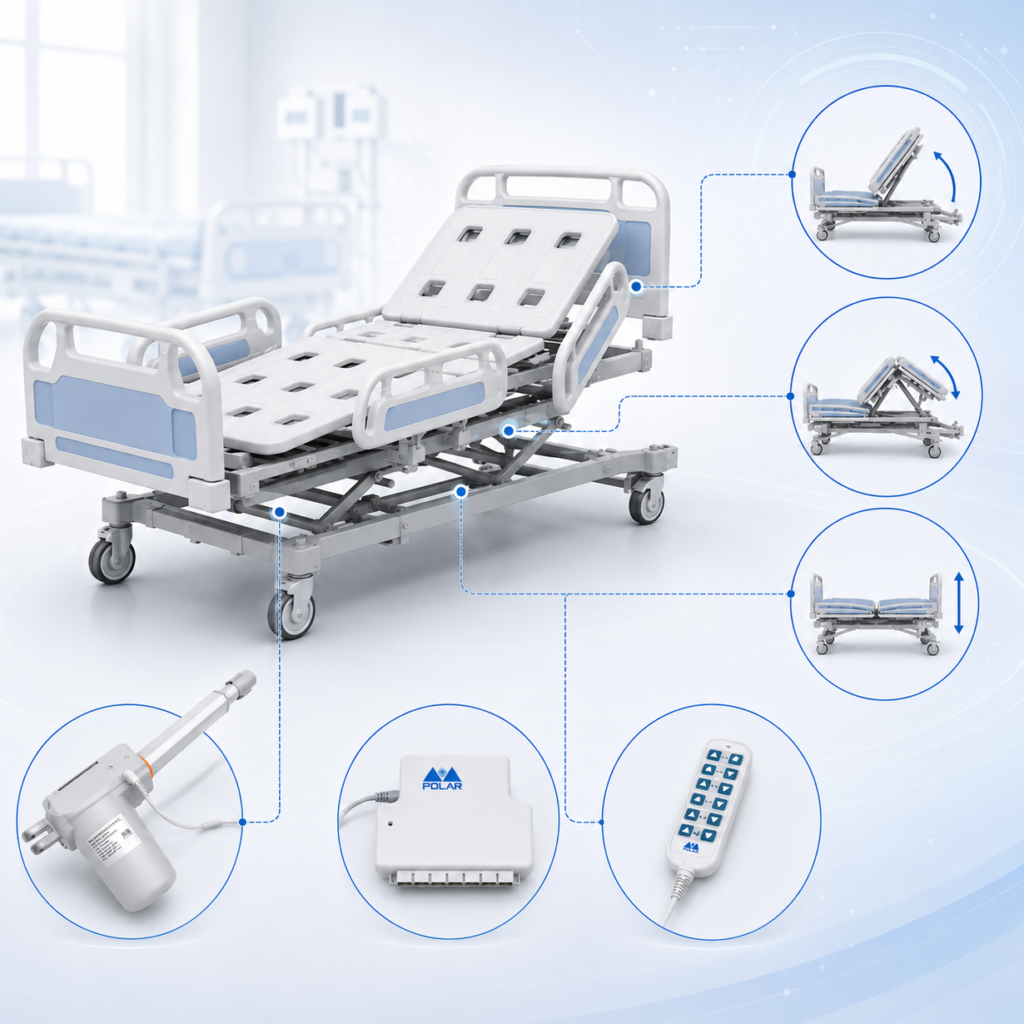
A 7 Function Hospital Bed Actuator is an electromechanical motion control system designed to automate multiple hospital bed positioning functions. These systems use synchronized actuators, control units, and patient remotes to achieve smooth and coordinated bed movement.

Typically, the system supports:

  • Backrest adjustment
  • Leg positioning
  • Bed height movement
  • Trendelenburg positioning
  • Reverse Trendelenburg movement
  • Chair positioning
  • Rehabilitation positioning

As a result, healthcare professionals can position patients more comfortably and efficiently according to medical requirements.

Furthermore, intelligent actuator synchronization helps maintain balanced movement during simultaneous adjustment operations. Consequently, hospitals achieve improved patient comfort and safer movement control. In addition, automated positioning systems help reduce manual handling efforts for healthcare staff.


Importance of 7 Function Hospital Bed Actuator in Healthcare

Modern healthcare environments require reliable patient positioning systems for critical care and rehabilitation applications. Therefore, advanced actuator systems are widely integrated into:

  • ICU beds
  • Critical care beds
  • Rehabilitation beds
  • Fowler beds
  • Home-care beds
  • Long-term patient care systems

In addition, automated positioning functions improve patient mobility and reduce caregiver workload during daily operation.

Because patient posture directly impacts comfort and healthcare support, hospitals increasingly rely on synchronized actuator technologies for advanced medical beds. Moreover, intelligent movement systems help improve operational efficiency while supporting smooth and controlled patient handling.

Similarly, automated bed systems contribute to safer healthcare procedures by minimizing unnecessary physical strain during patient repositioning.


Motion Coordination in 7 Function Hospital Bed Actuator Systems

One of the most important features of a 7 Function Hospital Bed Actuator system is synchronized motion coordination. Multiple actuators operate together through centralized control architecture to provide stable and accurate movement.

The actuator system integrates:

  • Medical linear actuators
  • Intelligent control electronics
  • Multi-function patient remotes
  • Synchronized motion control systems

Consequently, different bed sections can move simultaneously without affecting positioning stability.

For example, chair positioning and rehabilitation movement require coordinated adjustment between the backrest, leg section, and bed height system. Therefore, synchronized actuator operation helps maintain smooth transition between bed positions.

Additionally, intelligent control electronics help reduce mechanical stress during repeated movement cycles while maintaining safe operation. Furthermore, stable motion synchronization improves overall patient comfort during continuous positioning adjustments.


Key Features of 7 Function Hospital Bed Actuator Systems

Smooth Positioning Adjustment

The actuator system provides stable and controlled movement for multiple bed functions. As a result, patients experience smoother positioning during treatment and recovery.


Intelligent Motion Synchronization

Advanced synchronization technology helps maintain balanced actuator movement during simultaneous adjustment operations. Moreover, coordinated motion improves patient comfort and positioning accuracy.


Low Noise Operation

Modern healthcare environments require silent equipment operation. Therefore, actuator systems are designed for low-noise movement suitable for ICU and patient care applications.

In addition, reduced operational noise helps create a more comfortable healthcare environment for patients and caregivers.


Reliable Continuous Performance

Hospital bed actuator systems are developed for continuous-duty medical applications. Consequently, they maintain stable operation during repeated usage cycles.

Furthermore, reliable actuator performance helps healthcare facilities maintain uninterrupted patient care support.


High Load Handling Capability

Advanced actuator systems support heavy-duty hospital bed applications while maintaining smooth movement performance. As a result, hospitals can use these systems for various healthcare furniture configurations.


Compact Medical Integration

The actuator system integrates efficiently within modern medical bed structures. In addition, compact electronic design improves overall healthcare furniture functionality.

Moreover, integrated actuator systems help optimize medical bed design without affecting operational efficiency.


Role of Linear Actuator Controller in Hospital Beds

A Linear Actuator Controller manages communication between actuators, patient remotes, and electronic control systems. Therefore, it plays an important role in synchronized movement coordination and operational safety.

The controller system supports:

  • Motion synchronization
  • Position management
  • Safety protection functions
  • Overload prevention
  • Limit switch monitoring

As a result, hospitals achieve smooth and reliable bed operation during continuous patient care.

Furthermore, intelligent controllers improve actuator efficiency while reducing operational stress on mechanical components. Consequently, the overall performance stability of the hospital bed system improves significantly.


Benefits of Linear Actuator 24V Systems

7 Function Hospital Bed Actuator

Most medical bed systems use Linear Actuator 24V technology because it provides safe and efficient operation.

Major advantages include:

  • Smooth actuator movement
  • Low operational noise
  • Stable power efficiency
  • Reliable continuous-duty performance
  • Safe low-voltage operation

In addition, 24V actuator systems are highly suitable for healthcare environments where controlled and silent movement is essential.

Because of their stable operational characteristics, these systems are widely preferred in advanced hospital beds and medical furniture applications. Furthermore, low-voltage actuator systems support safer healthcare operation standards.


Importance of Patient Remote Systems

7 Function Hospital Bed Actuator

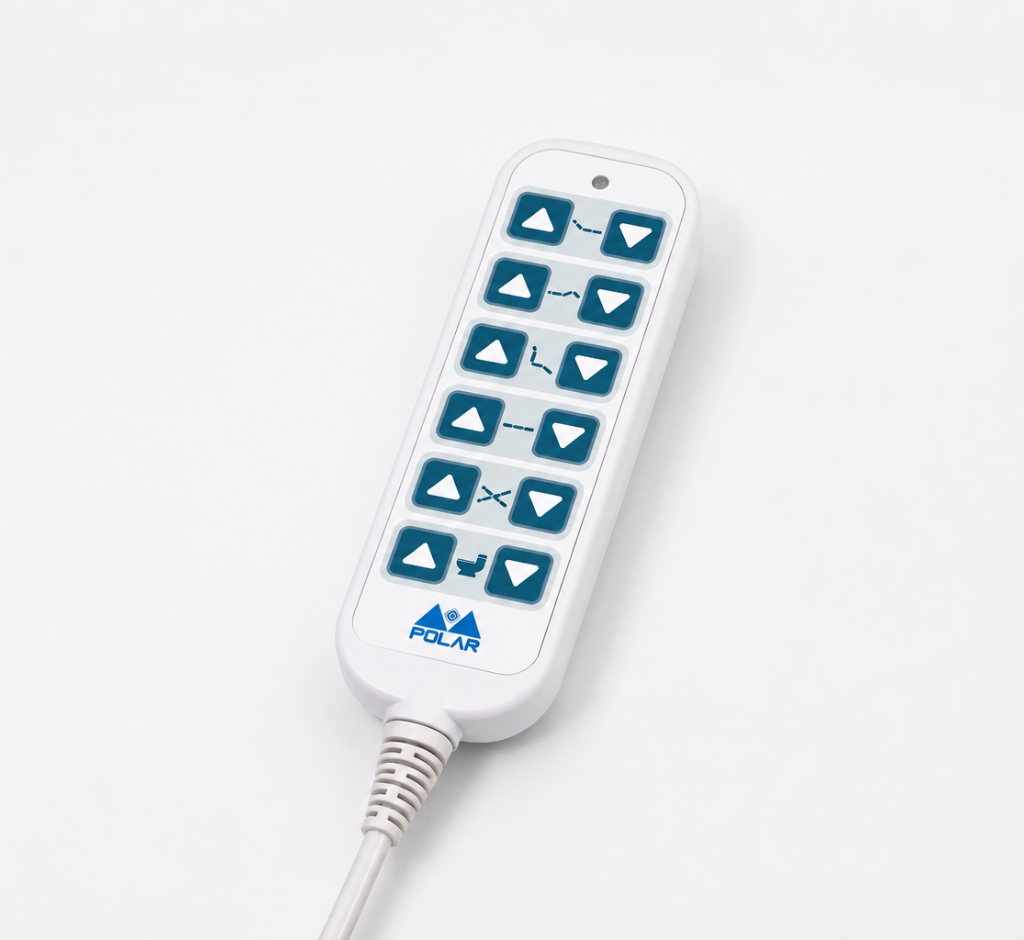
Patient remotes are essential components of advanced hospital bed systems. These remotes allow patients and caregivers to control multiple bed functions conveniently and safely.

The 7 function remote supports:

  • Independent bed movement control
  • Ergonomic operation
  • Medical-grade button interface
  • Durable construction
  • Reliable continuous operation

Moreover, easy-to-use button layouts improve operational convenience for both patients and healthcare staff.

As a result, patient remotes contribute significantly to overall patient comfort and healthcare efficiency. Additionally, intuitive controls help improve usability during continuous medical care operation.


Advantages of 7 Function Hospital Bed Actuator Technology

Improved Patient Comfort

Advanced positioning functions support rehabilitation, treatment, and long-term patient care applications.

Better Caregiver Efficiency

Automated movement systems reduce manual effort during patient handling procedures. Consequently, healthcare staff can manage patient positioning more efficiently.

Stable Motion Coordination

Synchronized actuators maintain balanced movement during multiple positioning adjustments. In addition, stable movement improves operational reliability.

Quiet Healthcare Operation

Low-noise actuator systems improve comfort in hospitals and ICU environments. Therefore, patients experience a better recovery environment.

Reliable Long-Term Performance

Medical actuator systems are designed for continuous healthcare applications. Moreover, durable actuator construction supports long operational service life.

Therefore, healthcare facilities increasingly adopt intelligent actuator systems for modern patient care infrastructure.


Applications of 7 Function Hospital Bed Actuator Systems

A Hospital bed linear actuator system is widely used across various healthcare applications, including:

  • ICU beds
  • Critical care beds
  • Fowler beds
  • Rehabilitation beds
  • Home-care beds
  • Advanced medical furniture systems

Moreover, synchronized motion systems improve patient mobility and healthcare operational efficiency. As a result, hospitals achieve better patient care support through intelligent positioning systems.


Polar Automation – Advanced Hospital Bed Actuator Solutions

Polar Automation specializes in advanced medical motion control systems for hospital beds and healthcare furniture applications. The company develops synchronized actuator technologies designed for smooth and reliable patient positioning.

Their solutions include:

  • 7 Function Hospital Bed Actuator systems
  • Linear Actuator Controller integration
  • Linear Actuator 24V systems
  • Multi-function patient remotes
  • Intelligent medical control electronics
  • Advanced synchronized actuator systems

Moreover, their products are designed for ICU beds, rehabilitation systems, Fowler beds, and modern healthcare furniture applications. Consequently, healthcare manufacturers can integrate reliable motion control technologies into advanced medical bed systems.


Future of 7 Function Hospital Bed Actuator Technology

Healthcare engineering is continuously evolving toward intelligent and automated patient care systems. Therefore, demand for advanced actuator technologies continues increasing across healthcare industries.

Modern healthcare environments require:

  • Intelligent motion control
  • Automated patient positioning
  • Reliable synchronized movement
  • Compact medical electronics
  • Advanced rehabilitation support systems

Consequently, actuator systems will continue playing a major role in future healthcare infrastructure and medical furniture development. Furthermore, increasing healthcare automation will drive demand for advanced synchronized movement technologies.


Conclusion

A 7 Function Hospital Bed Actuator system provides advanced movement control for modern healthcare applications. By integrating synchronized actuators, intelligent control electronics, and ergonomic patient remotes, these systems support smooth and reliable hospital bed positioning.

From advanced Linear Actuator Controller technology to efficient Linear Actuator 24V systems, automated medical bed solutions improve patient comfort, caregiver convenience, and operational efficiency.

With advanced engineering and healthcare-focused innovation, Polar Automation continues delivering reliable actuator systems for modern hospital beds and medical furniture applications.