Modern home healthcare requires equipment that supports both patient comfort and easier caregiving. A reliable Home Care Bed Actuator System helps adjust different sections of a motorized bed, allowing patients and caregivers to achieve suitable positions with less manual effort.Home care beds are commonly used for patients who require extended care, recovery support, elderly care, or assistance with daily positioning. Since these beds may need frequent adjustments, manual mechanisms can make positioning difficult. Therefore, linear actuator systems for home care beds provide a practical way to automate bed movement.By combining linear actuators with a suitable control system, home care beds can support functions such as backrest adjustment, leg positioning, and height movement. As a result, motorized bed systems provide greater flexibility during daily patient care.
Why Home Care Bed Actuator Systems Are Important
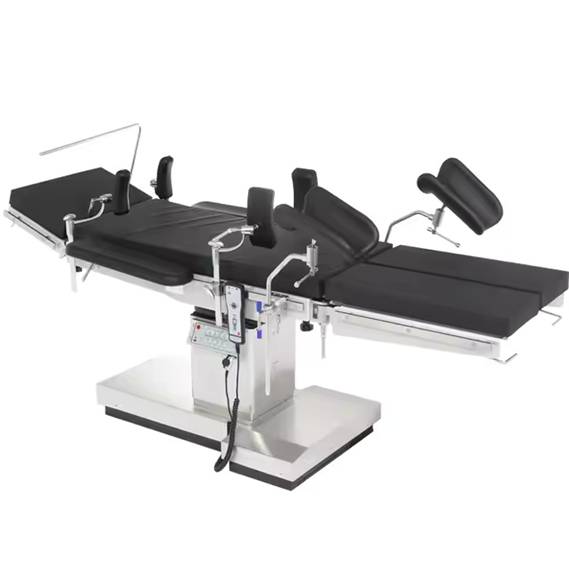
A Home Care Bed Actuator System controls the mechanical movement of different sections of an electric medical bed. The system converts electrical energy into controlled linear movement, allowing specific sections of the bed to move according to the selected function.
In home care environments, patients may need frequent changes in position while sleeping, resting, eating, reading, or receiving care. Caregivers may also need to adjust the bed during routine activities.
A motorized actuator system can control:
- Backrest positioning
- Leg and foot section adjustment
- Bed height adjustment
- Patient positioning
- Multiple bed functions through one control interface
Therefore, actuator-based systems can make bed positioning more convenient and reduce repeated manual adjustments.
How Linear Actuators Work in Home Care Beds
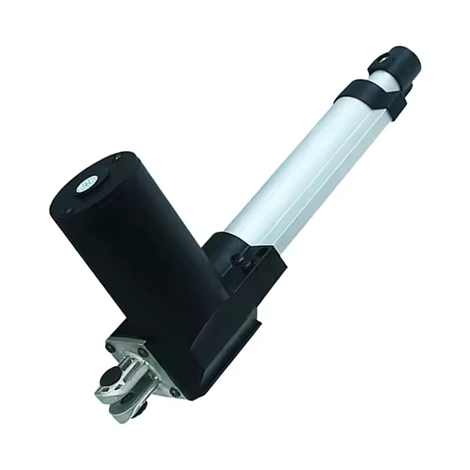
A Linear Actuator for Home Care Beds is an electromechanical device that converts motor rotation into controlled linear movement. This movement is transferred to the corresponding section of the bed.
For example, when a caregiver presses a button to raise the backrest, the control system activates the appropriate actuator. The actuator then extends or retracts, causing the backrest mechanism to move.
The basic process can be understood as:
Control Input → Actuator Control System → Linear Actuator Movement → Bed Position Adjustment
Similarly, separate actuators can control different sections of the bed. This allows manufacturers to develop single-function or multi-function bed systems according to their design requirements.
As a result, Home Care Bed Control System provide a controlled method for operating different mechanical functions of a home care bed.
Key Functions of Home Care Bed Actuator Systems
A major advantage of an actuator-based bed is the ability to combine several positioning functions into one coordinated system. The exact configuration depends on the bed design and the number of actuators used.
1. Backrest Adjustment
Backrest adjustment is one of the most common functions of a Motorized Home Care Bed. Patients may require different upper-body positions while sitting, eating, reading, resting, or interacting with caregivers.
A linear actuator provides controlled movement of the backrest section. Furthermore, an electric handset or control panel allows the user or caregiver to adjust the position without manually lifting the bed section.
This supports:
- Easier patient positioning
- Convenient daily adjustment
- Controlled backrest movement
- Greater positioning flexibility
2. Leg and Foot Section Adjustment
A Home Care Bed Actuator System can also control the leg or foot section. This allows the lower portion of the bed to move according to the selected position.
A dedicated actuator can provide controlled movement while allowing the leg section to operate independently or together with other bed functions.
This function is particularly useful when the bed requires multiple adjustable positions. Moreover, coordinating the leg actuator with the backrest actuator can create a more flexible positioning system.
3. Height Adjustment
Bed height is another important function in modern electric beds. Different situations may require different bed heights.
For example, a caregiver may raise the bed while assisting a patient. A lower position may be preferred during rest or when preparing the bed.
A Hospital Bed Linear Actuator System can provide controlled vertical movement when height adjustment is included in the bed design.
Therefore, height-adjustable actuator systems can give manufacturers greater flexibility when designing home care and medical beds.
4. Multi-Function Bed Positioning
Modern home care beds may include several adjustable functions. As the number of actuators increases, coordinating their operation becomes more important.
A Multi-Function Actuator Control System can coordinate multiple motors through a single control architecture. Depending on the design, the system can manage backrest, leg, height, tilt, and other positioning functions.
This allows manufacturers to develop flexible beds while keeping operation simple for the end user.
Benefits of Home Care Bed Actuator Systems
Beyond movement control, actuator systems provide several practical benefits for patients, caregivers, and medical equipment manufacturers.
1. Reduced Manual Effort
Manual bed adjustment can require physical effort, especially when the bed is frequently repositioned. A motorized system allows the required movement to be controlled electrically.
As a result, caregivers can adjust the bed without manually lifting or repositioning heavy sections.
2. Easier Patient Positioning
Patients may require different positions throughout the day. A Motorized Home Care Bed allows these adjustments to be performed using a handset or control panel.
Therefore, patients and caregivers can make routine positioning changes more conveniently.
3. Smooth and Controlled Movement
Linear actuators provide controlled extension and retraction. When properly integrated with the control system and mechanical structure, they can provide consistent movement of the selected bed section.
This makes actuator technology suitable for applications where controlled positioning is important.
4. Flexible Bed Configuration
Different home care applications may require different numbers of adjustable functions. An actuator-based architecture allows manufacturers to select the appropriate number and configuration of actuators.
Consequently, the same basic technology can be adapted for different bed designs and positioning requirements.
5. Convenient Operation
A handset or control panel can provide dedicated controls for different functions. Instead of manually adjusting individual sections, the user can select the required movement from a centralized interface.
This makes the overall bed operation easier to understand and use.
Control Systems and Handset Operation
The actuator is only one part of a complete Home Care Bed Control System. The control electronics determine how each actuator responds to user input.
A handset or membrane control panel can provide dedicated buttons for different bed functions. When a button is pressed, the controller sends the appropriate electrical signal to the selected actuator.
The overall architecture can be represented as:
Handset / Control Panel → Control System → Multiple Actuators → Bed Mechanisms
This arrangement allows several functions to be managed through one interface.
Furthermore, integrated control systems can help manufacturers coordinate multiple actuators while maintaining a straightforward operating interface for patients and caregivers.
Applications of Home Care Bed Actuator Systems
Although home healthcare is the primary application, actuator-based bed systems can be used across several patient-care environments.
Home Healthcare: Supports patients receiving extended care at home with adjustable bed positioning.
Elderly Care: Provides motorized positioning functions for beds used in residential and assisted-care environments.
Patient Recovery: Allows adjustable positioning during recovery and rehabilitation.
Long-Term Care: Supports repeated bed adjustments for patients who require ongoing assistance.
Medical Equipment: Linear actuator and control technologies can also be integrated into different types of adjustable medical beds.
Because actuator configurations can be customized, manufacturers can select the number and type of functions according to their specific bed design.
How Polar Automation Supports Home Care Bed Development
Polar Automation develops Linear Actuator Control Systems for medical and patient-care equipment. Its control solutions are designed to coordinate multiple actuators and support different bed functions through integrated control architectures.
For home care bed manufacturers, a suitable actuator control system can provide the foundation for developing multi-function electric beds. Depending on the required configuration, the system can coordinate functions such as backrest, leg, height, and other positioning movements.
Polar Automation also supports modular and embedded control system approaches, allowing manufacturers to select an architecture that suits their equipment design.
This flexibility can benefit OEMs developing home care beds, hospital beds, ICU beds, and other medical positioning systems.
Conclusion
Home healthcare equipment needs to provide convenient positioning while remaining practical for both patients and caregivers. A reliable Home Care Bed Actuator System provides the mechanical and electronic foundation required to automate different bed movements.
From backrest and leg adjustment to height positioning and multi-function operation, linear actuator systems can make everyday bed adjustment easier and more controlled.
Moreover, integrating multiple actuators with a centralized Linear Actuator Control System allows manufacturers to develop flexible electric bed designs while simplifying operation through a handset or control panel.
As home healthcare continues to evolve, Motorized Home Care Beds and actuator-based control systems can play an important role in creating more adaptable, comfortable, and user-friendly patient-care equipment.