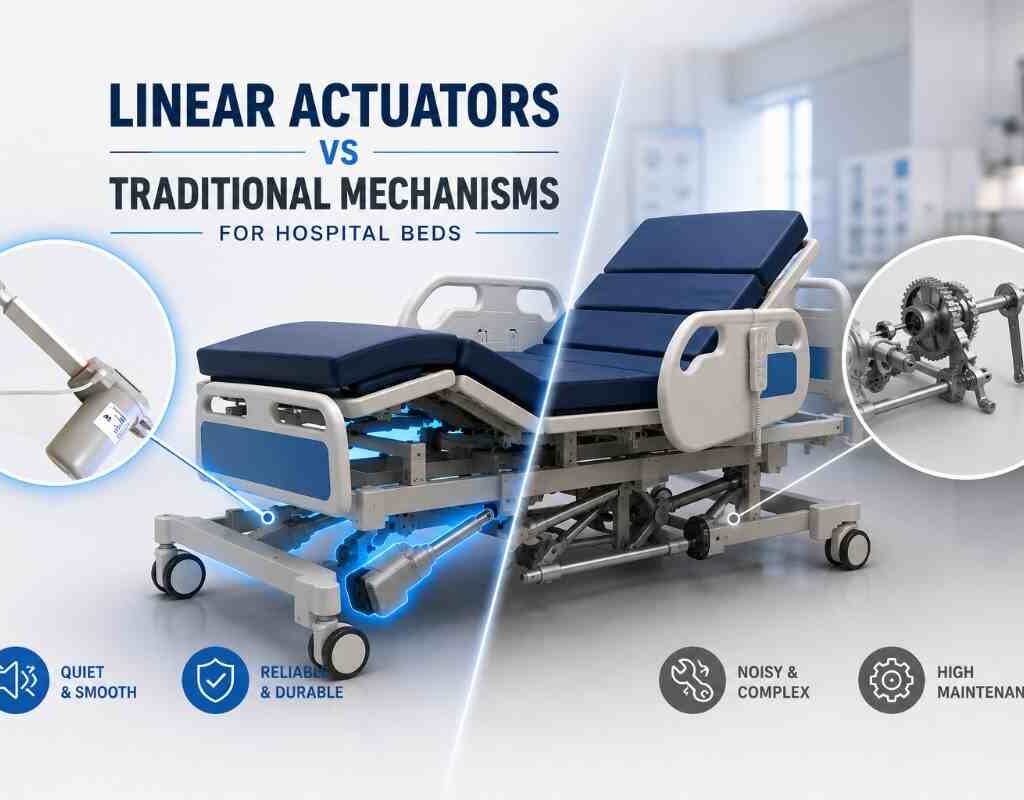
Linear Actuators vs Traditional Mechanisms for Hospital Beds

linear actuator


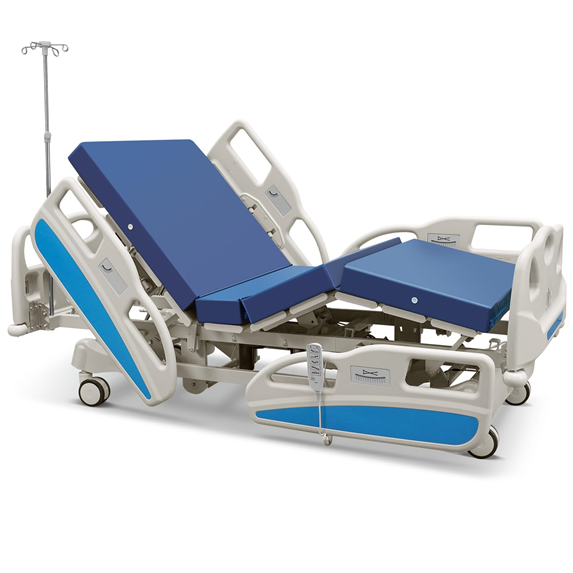
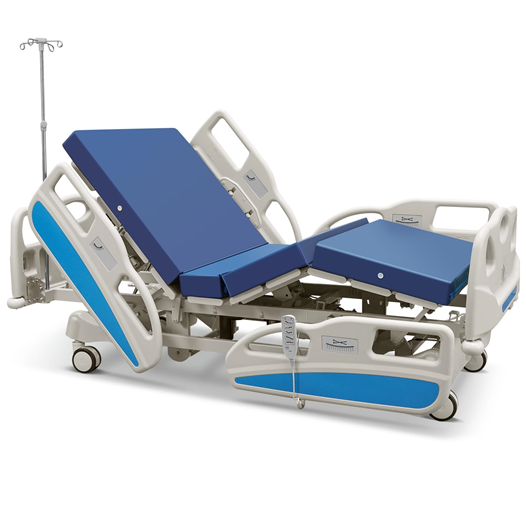
Modern hospital beds need Linear Actuators to do much more than support a patient. They must provide smooth positioning, reliable movement, easy operation, and dependable performance. As a result, hospital bed manufacturers are moving toward electrically adjustable designs that can support multiple bed functions.

One of the key technologies behind this movement is Linear Actuators. These systems convert electrical energy into controlled linear motion. They can adjust the backrest, leg section, bed height, tilt, and other positions with accuracy.

However, traditional mechanical mechanisms still have a place in some bed designs. So, which approach is better for modern hospital beds?

The answer depends on the bed design, required functions, operating environment, and user expectations. Still, for many modern electric hospital beds, linear actuator-based systems offer clear advantages.

What Are Linear Actuators?


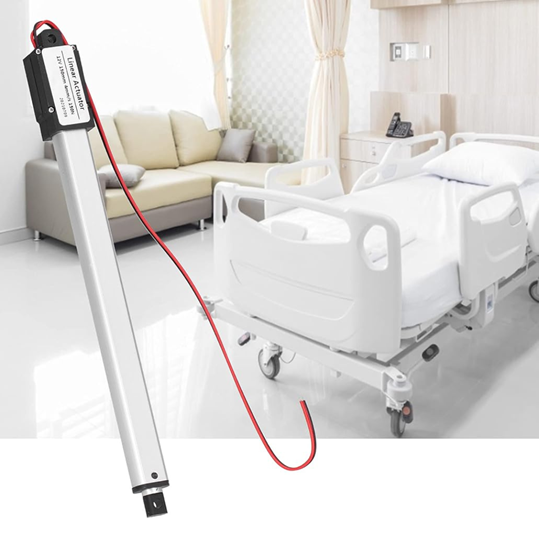
A linear actuator is a device that creates controlled movement along a straight line. In an electric hospital bed, the actuator can move a specific section of the bed when the user presses a button or activates a control.

For example, one actuator can raise or lower the backrest. Another can adjust the leg section. Additional actuators can control bed height, tilt, or other movements.

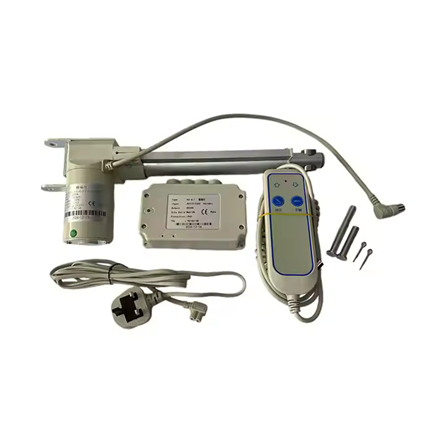
The actuator works as part of a larger system. A typical setup can include the actuator, control box, hand controller, and safety functions. Together, these components allow the bed to deliver controlled and repeatable movement.

Because of this, linear actuators have become an important part of modern adjustable hospital beds.

What Are Traditional Hospital Bed Mechanisms?


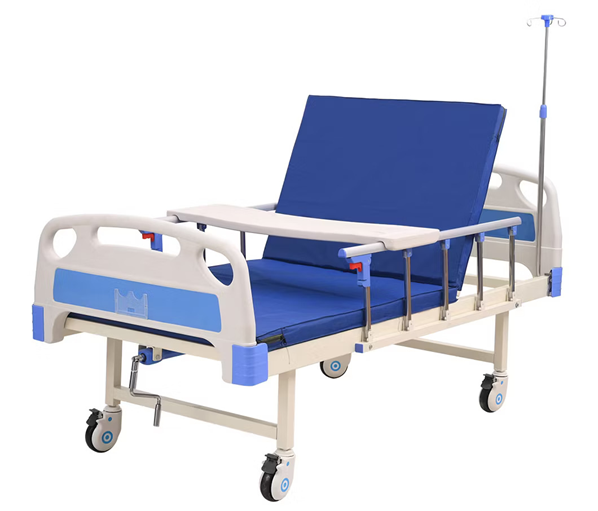
Traditional mechanisms use mechanical components such as levers, linkages, gears, springs, shafts, or manually operated adjustment systems.

These mechanisms can provide basic bed positioning without relying on an electric motor. In some applications, that simplicity can be useful.

For example, a manually adjustable bed may work well where only a few basic positions are required. It can also reduce dependence on electrical components.

However, as hospital beds become more advanced, mechanical systems can become more complicated. Multiple functions may require additional linkages and components. Consequently, achieving smooth and independent movement can become more challenging.

Linear Actuators vs. Traditional Mechanisms: Key Differences


The biggest difference comes down to how the bed creates and controls movement.

Traditional mechanisms rely mainly on mechanical force and manual operation. In contrast, linear actuators use an electric motor and mechanical drive system to produce controlled movement.

This difference affects several important areas.

1. Movement and Position Control

Modern hospital beds often require precise positioning. Healthcare professionals may need to adjust the backrest or leg section to a specific position. Patients may also need frequent position changes for comfort and care.

With linear actuators, each movement can be controlled through a suitable control system. The actuator moves according to the input from the hand controller or bed control interface.

Traditional mechanisms, on the other hand, depend more heavily on manual adjustment. Therefore, achieving consistent positioning can be less convenient.

For beds with multiple adjustable functions, electric actuation offers a more practical approach.

2. Patient and Caregiver Convenience

Ease of operation matters in a hospital environment.

With an electric system, a caregiver can adjust the bed using a hand controller or integrated control panel. The patient may also operate certain functions without requiring manual assistance.

By comparison, traditional mechanisms may require physical effort. The user might need to operate a lever, rotate a handle, or manually adjust a section of the bed.

Therefore, linear actuator-based systems can improve convenience for both patients and caregivers.

3. Multiple Bed Functions

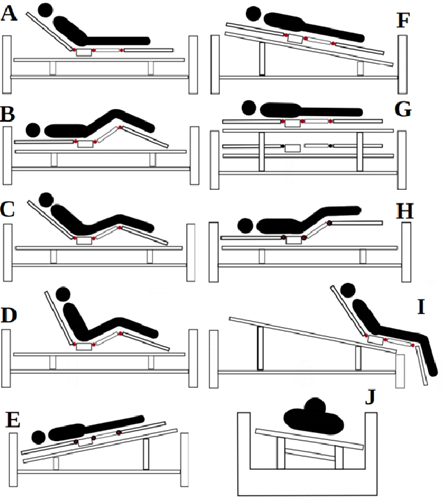
A modern hospital bed may support several functions, including:

  • Backrest adjustment

  • Leg section adjustment

  • Height adjustment

  • Trendelenburg positioning

  • Reverse Trendelenburg positioning

  • Bed tilt

Managing several functions with traditional mechanical mechanisms can require a complex arrangement of components.

Linear actuators provide a more flexible way to control individual movements. For instance, a multi-function control system can coordinate several actuators and provide dedicated control for different bed positions.

As a result, actuator-based designs are well suited to advanced electric hospital beds.

4. Smooth and Controlled Movement

Hospital bed movement should be stable and controlled. Sudden or inconsistent movement can affect patient comfort and overall usability.

A properly selected actuator can provide controlled movement at a suitable speed. The control system can also coordinate actuator operation according to the bed’s design requirements.

Traditional mechanical systems can provide reliable movement as well. However, their performance depends heavily on mechanical design, adjustment, and the condition of individual components.

Over time, wear in mechanical parts may also affect movement quality.

5. Safety and Control

Safety is another important consideration for hospital bed manufacturers.

Electric hospital beds can integrate actuator movement with control logic and safety functions. For example, a control system can manage multiple actuators and respond to specific operating conditions.

Emergency functions can also be incorporated into suitable actuator control systems. In critical situations, the bed can support predefined movements such as an emergency flat or CPR position, depending on the system design.

Traditional mechanisms can also be designed with safety in mind. However, adding advanced electronic control and coordinated movement is naturally more difficult when the system depends primarily on manual mechanical operation.

6. Design Flexibility for OEMs

Hospital bed manufacturers need flexibility when developing different models.

An OEM may want to create a basic adjustable bed for one market and a more advanced multi-function model for another. The actuator and control system can be selected according to the required functions, load conditions, stroke length, speed, and installation space.

This flexibility makes electric actuation suitable for different hospital bed configurations.

Moreover, integrated control systems can help reduce unnecessary wiring and simplify system integration when designed specifically for the application.

Are Traditional Mechanisms Still Useful?


Yes. Traditional mechanisms are not automatically outdated.

They can still make sense for basic beds where electrical adjustment is not required. They may also suit applications where simplicity, manual operation, or lower system complexity is the priority.

However, the requirements change when the bed needs several adjustable functions.

For modern hospital beds, users increasingly expect easy operation and smooth positioning. At the same time, OEMs need reliable systems that can integrate with the overall bed design. Therefore, electric actuation often becomes the more practical solution.

Why Linear Actuators Suit Modern Hospital Beds


The main advantage is not simply that an actuator moves the bed. The real benefit comes from controlled, repeatable, and electrically managed movement.

A well-designed actuator system can help manufacturers create beds that are easier to operate and more adaptable to different care requirements.

Furthermore, actuators can work together with dedicated control systems to manage several bed functions. This combination creates a complete motion-control solution rather than an isolated mechanical component.

For hospital bed OEMs, that distinction is important.

The right solution should consider more than actuator specifications alone. Load capacity, stroke length, speed, duty cycle, installation space, noise, safety requirements, and control compatibility all need careful evaluation.

Linear Actuators or Traditional Mechanisms: Which Should You Choose?


There is no single solution for every hospital bed.

If the design requires basic manual adjustment, a traditional mechanism may still be suitable. However, if the bed requires multiple functions, easy operation, precise movement, and integrated control, linear actuators offer significant advantages.

In particular, electric hospital beds with three, five, or more functions can benefit from coordinated actuator control.

Therefore, the better choice depends on the intended application. For modern, multi-function hospital beds, however, linear actuator-based systems provide a strong foundation for reliable and convenient movement.

Conclusion


Hospital bed technology continues to evolve. As beds become more adjustable and user-focused, the need for reliable motion-control systems also increases.

Traditional mechanisms remain useful for simple applications. However, Linear Actuators offer greater flexibility for modern electric hospital beds that require multiple controlled movements.

They can support smoother positioning, easier operation, flexible bed configurations, and integration with dedicated control systems.

For OEMs and medical equipment manufacturers, the key is to select an actuator and control solution that matches the bed’s functional and safety requirements. When these components are designed to work together, they can create a more reliable and user-friendly hospital bed.

Ultimately, the goal is not simply to move the bed. It is to create controlled movement that supports better usability, efficient operation, and modern patient-care requirements.
How Emergency Backup in Linear Actuators for Healthcare Beds Saves Lives

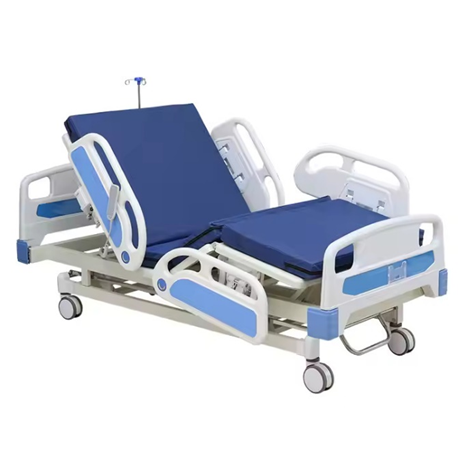
In Indian hospitals, the ability to adjust a patient’s bed during treatment isn’t just a matter of comfort—it can be a matter of life and death. This is where a Linear Actuator for Bed with an emergency backup system plays a vital role. Whether it’s adjusting the bed height, tilting during surgery, or supporting recovery positions, actuators provide seamless motion. But what happens during a power outage?

Let’s explore how emergency backup in actuators saves lives and why this technology is essential in India’s healthcare sector.

What Is a Linear Actuator for Healthcare Bed?

A linear actuator is a device that creates straight-line motion, enabling different sections of a bed to be raised or lowered. These actuators are typically electric and integrated into smart beds. Their role includes:

  • Raising or lowering the entire bed
  • Adjusting head and leg sections
  • Tilting the bed for treatment or surgical needs

How Electric Actuators Work

The electric actuator working principle is based on converting electrical energy into mechanical movement. An electric motor turns a screw, creating a pushing or pulling action.

Key Components:

Modern healthcare beds include multiple electric actuators that can be controlled via remote or panel to provide patient-centric positioning.

Why Power Backup in Actuators Is Critical in India

India still faces power instability in many urban and rural regions. Even a brief power cut in an ICU or operation theatre can disrupt critical care. An actuator without backup becomes non-functional in such cases, risking patient safety.

Emergency Backup Advantages:

  • Allows continued bed movement during power outages
  • Helps reposition critical patients immediately
  • Reduces physical strain on caregivers
  • Enables quick response in cardiac or trauma cases

Emergency Situations Where Actuator Backup Saves Lives

1. ICU and Ventilator Patients

A patient requiring constant head elevation on a ventilator may suffer if the bed can’t be repositioned quickly during a power cut.

2. Cardiac Arrest

In a code blue emergency, doctors need the bed flat to perform CPR. A bed stuck in a raised position due to power loss delays this action.

3. Post-Surgery Care

Post-operative care demands frequent repositioning. Backup-powered actuators ensure uninterrupted comfort and recovery.

Electric Actuator Types Used

At Polar Automation, we offer several electric actuator types to meet different hospital needs:

  • Linear Actuators for head and leg adjustments
  • Lift Column Actuators for height adjustment
  • Dual Motor Systems for independent multi-section control

These can be integrated with emergency battery backups or manual overrides.

Benefits of Adjustable Bed Actuators with Emergency Backup

An adjustable bed actuator with emergency support helps hospitals by:

  • Improving patient handling during critical care
  • Avoiding delays during power failures
  • Meeting NABH and hospital equipment standards
  • Enhancing overall staff productivity

Trusted Electric Actuator Manufacturers in India

Polar Automation, a sister concern of Linepro Controls, is among the leading electric actuator manufacturers in India. Our actuators are designed for Indian conditions—power fluctuation, heavy usage, and 24×7 operations.

Why Choose Us?

  • Durable and quiet actuators
  • Built-in or optional backup solutions
  • Easy-to-maintain mechanisms
  • Fast customization and delivery

Real Example: Emergency Backup in Action

A leading hospital in Nagpur faced a power cut during a monsoon emergency. Thanks to Polar Automation’s backup-supported healthcare bed actuators, ICU beds remained operational for over an hour, helping save two patients who needed immediate repositioning.

Final Thoughts

A linear actuator is not just a functional tool—it’s a safety mechanism. In Indian hospitals, where every second matters and power failures are common, emergency power backup in electric actuators can truly be a lifesaver.

Upgrading healthcare beds with reliable actuators and backup systems is not a luxury—it’s a necessity.


Looking for custom-built actuators with emergency backup? Visit: www.polar-automation.com and contact us for a demo today.

Linear Actuators in Healthcare Automation

Introduction

India’s healthcare industry is evolving rapidly. Consequently, automation improves patient care, efficiency, and medical equipment performance. A key component in this transformation is the Linear Actuator System. Polar Automation, provides hospital bed actuators, adjustable linear actuators, and industrial linear actuators for medical applications.

Understanding Linear Actuator System

A Linear Actuator System creates straight-line motion. Unlike conventional electric motors, it moves precisely and efficiently. Medical equipment relies on these actuators for smooth operation. They are essential in hospital beds, patient lifts, and diagnostic devices.

Applications of Linear Actuator in Healthcare

Hospital Beds and Patient Care Equipment

Linear Actuator Control System Hospital Beds and Patient Care Equipment

Hospital bed actuators enable smooth height and tilt adjustments. Therefore, this enhances patient comfort and supports medical procedures. The demand for adjustable linear actuators in hospital beds is growing across India.

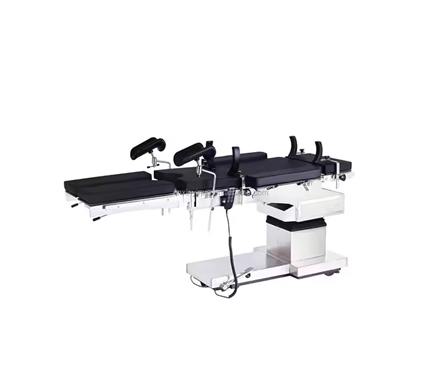
Surgical and Examination Tables

Linear Actuator Control System Surgical and Examination Tables

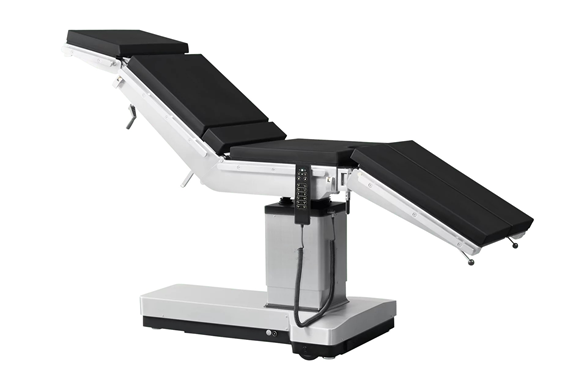
Modern tables use adjustable linear actuators for precise positioning. Moreover, these actuators provide silent and smooth motion, which is essential in surgical environments.

Wheelchairs and Mobility Aids

Linear Actuator control system Wheelchairs and Mobility Aids

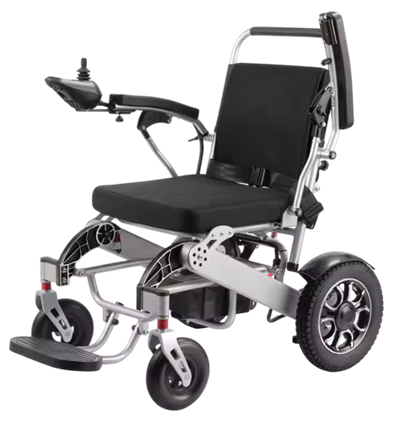
12V linear actuators in wheelchairs allow easy seat adjustments. As a result, they enhance mobility, comfort, and independence for disabled patients.

Rehabilitation and Therapy Equipment

Rehabilitation and Therapy Equipment

Rehabilitation devices use linear actuator systems for controlled movements. Consequently, these improve recovery and treatment effectiveness.

Medical Imaging and Diagnostic Machines

Linear Actuator control system Medical and Diagnostic Machines

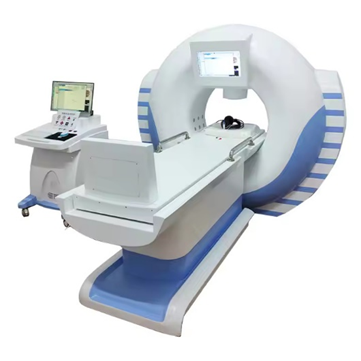
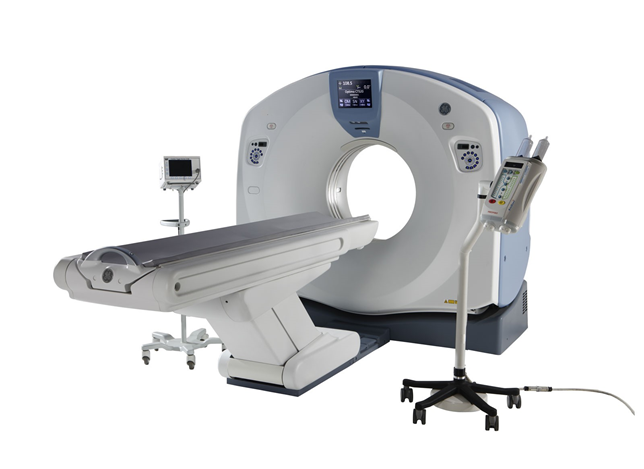
MRI machines, CT scanners, and X-ray tables need precise movement. Thus, linear motor actuators ensure accuracy and stability, thereby improving imaging quality.

Automated Laboratory Equipment

Automated Laboratory Equipment

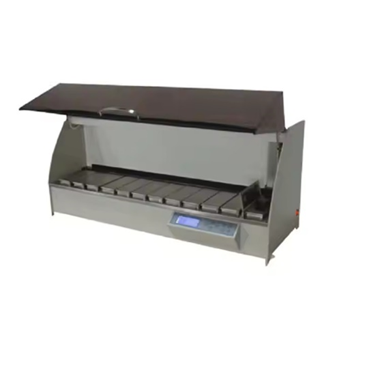
Industrial linear actuators automate pathology and pharmaceutical labs. They help in sample handling, fluid dispensing, and robotic lab processes. Thus, this enhances efficiency and accuracy in medical testing.

Benefits of Using Linear Actuator System in Healthcare

1. Enhanced Patient Comfort

Smooth, noiseless motion in medical equipment significantly improves the patient experience. In particular, hospital bed actuators help position patients comfortably.

2. Precision and Reliability

Medical equipment requires precise movements. Therefore, linear actuator systems ensure smooth and controlled adjustments.

3. Ease of Operation

With a linear actuator control box, hospital staff can operate complex equipment easily. This, in turn, reduces manual effort and error risks.

4. Increased Safety Standards

Hospital bed actuators and adjustable linear actuators enhance patient safety. They reduce injury risks during treatment or transportation.

5. Energy Efficiency and Sustainability

Modern 12V linear actuators consume less power. Consequently, they offer an eco-friendly solution for medical applications. Additionally, industrial linear actuators improve sustainability by lowering energy use.

Why Choose Polar Automation for Linear Actuators in Healthcare?

Linear Actuator control system remote & Control box

Polar Automation, a trusted name in India, specializes in linear actuator . Here’s why it stands out:

  • Customized Solutions – Tailor-made linear motor actuators for hospitals and medical centers.
  • Advanced Technology – High-tech linear actuator control box for precise motion control.
  • Reliable Performance – Durable products with low maintenance requirements.
  • Compliance with Medical Standards – Products meet strict safety and hygiene regulations.

Future of Linear Actuators in the Indian Healthcare Market

India’s healthcare sector is advancing rapidly. As a result, the demand for hospital bed actuators, adjustable linear actuators, and industrial linear actuators will continue to grow. Moreover, government initiatives like Make in India and increased healthcare investments are driving this demand.

Conclusion

Linear Actuator are transforming healthcare in India. From hospital bed actuators to linear motor actuators, they enhance precision, safety, and efficiency. Polar Automation provides high-quality industrial linear actuators and 12V linear actuators to support India’s healthcare industry. By adopting automation, hospitals can improve operations and patient care.

As demand for smart healthcare solutions rises, Linear Actuator will remain essential. If you need linear actuator , linear actuator control boxes, or linear motor actuators, trust Polar Automation for innovation and excellence.

Electric Beds vs. Manual Beds: Which is the Better Option for Hospitals?

Introduction

Choosing the right hospital bed is crucial for patient care, comfort, and operational efficiency. With the growing demand for advanced medical solutions in India, hospitals often compare electric beds vs. manual beds to determine the best option. A Linear Actuator Control System plays a vital role in the functionality of electric beds, offering better adjustability and ease of use. But are electric beds always the superior choice? Let’s explore the differences between electric beds and manual beds to help hospitals make an informed decision.

Understanding Electric Beds and Manual Beds

What is an Electric Bed?

Electric Bed - Linear Actuator Control System

An electric bed for patients is designed with a Linear Actuator Control System that allows automatic adjustments with minimal effort. These beds provide better mobility, reduce physical strain on caregivers, and enhance patient comfort.

What is a Manual Hospital Bed?

Manual bed - Linear Actuator Control System
A Manual Hospital Bed

A manual hospital bed operates using hand cranks, allowing caregivers to adjust the bed’s height and sections manually. While more affordable than electric beds, they require physical effort and take longer to adjust.

Electric Beds vs. Manual Beds: Key Differences

1. Ease of Use and Adjustability

  • Electric Bed for Patients: Features a Linear Actuator Control System for effortless adjustments.
  • Manual Bed for Patients: Requires manual cranking, which can be physically demanding for caregivers.

2. Patient Comfort and Safety

  • Electric Beds: Offer customized positioning, reducing the risk of bedsores and improving circulation.
  • Manual Beds: Provide basic functionality but lack advanced positioning features.

3. Operational Efficiency

  • Electric Beds: Save time for nurses and hospital staff by reducing the need for manual adjustments.
  • Function Manual Beds: Require more time and effort, which can be challenging in high-demand hospital settings.

4. Cost Comparison

  • Electric Bed Price: Higher upfront cost but offers long-term benefits.
  • Manual Hospital Bed: More budget-friendly but may lead to increased labor costs over time.

5. Suitability for Indian Hospitals

  • Electric Beds in India: Ideal for hospitals with high patient turnover, ICU wards, and long-term care facilities.
  • Manual Beds in India: Suitable for budget-conscious hospitals or short-term patient stays.

Benefits of a Linear Actuator Control System in Hospital Beds

A Linear Actuator Control System enhances the efficiency of electric beds by providing:

  • Smooth and precise movements for patient positioning.
  • Reduced manual workload for caregivers.
  • Improved durability and longevity of hospital beds.

Which Option is Better for Hospitals in India?

While manual beds remain a cost-effective solution, the demand for electric beds with Linear Actuator Control Systems is increasing in India. Hospitals prioritizing patient care, efficiency, and automation should invest in electric beds to improve overall healthcare services.

Conclusion

When comparing electric beds vs. manual beds, it’s evident that electric beds provide superior comfort, efficiency, and ease of use. A Linear Actuator Control System ensures precise bed adjustments, enhancing both patient care and hospital operations. While the electric bed price may be higher, the benefits far outweigh the initial cost, making it a smart investment for modern healthcare facilities in India.

How Linear Actuator Enhance Medical Equipment Efficiency in Healthcare

In the rapidly evolving healthcare sector, the integration of advanced technologies is paramount to enhancing patient care and optimizing medical procedures. A pivotal component in this technological advancement is the Linear Actuator. These systems are instrumental in automating various medical equipment, thereby improving efficiency and precision in healthcare delivery.

Understanding Linear Actuator Systems

Linear Actuator Systems

A Linear Actuator System is designed to manage the movement of linear actuators, which convert rotational motion into linear motion. This conversion is crucial for applications requiring precise straight-line movements. In medical settings, such systems enable the accurate positioning and adjustment of equipment, ensuring both patient comfort and procedural efficiency.

The Working Principle of Linear Actuators

Linear actuators operate by utilizing a motor to drive a screw mechanism, translating rotational motion into linear displacement. This mechanism allows for controlled and precise movements, essential in medical applications where accuracy is critical. The integration of stepper motors in these actuators enhances their precision, providing incremental movements that are vital for delicate medical procedures.

Applications in Medical Equipment

Hospital Beds

Hospital Beds

Modern hospital beds equipped with linear actuators offer adjustable positions, allowing healthcare providers to elevate or recline sections of the bed to meet patient needs. This adjustability not only enhances patient comfort but also aids in medical procedures and examinations.

Surgical Tables

Surgical Tables

Precision is crucial in surgical procedures. Linear actuators enable the fine-tuning of surgical tables, allowing for exact positioning required during operations. This precision contributes to better surgical outcomes and increased safety.

Diagnostic Imaging Equipment

Diagnostic Imaging Equipment

In devices like MRI and CT scanners, linear actuators facilitate the precise movement and positioning of imaging components. This precision ensures high-quality images, leading to accurate diagnoses.

Patient Lifts and Mobility Aids

Patient Lifts and Mobility Aids

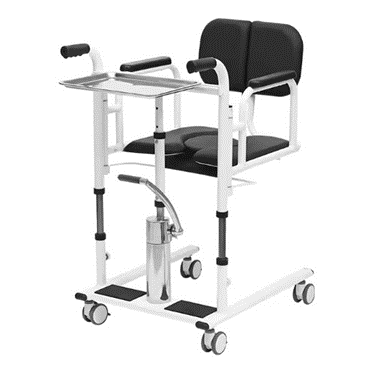
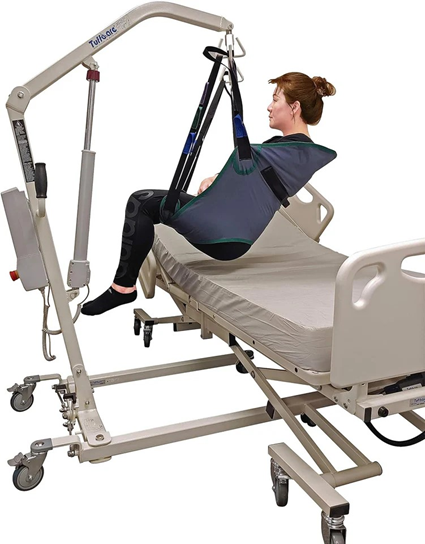
Linear actuators are integral in patient lifts, providing the necessary force to safely transfer patients with limited mobility. They are also used in adjustable wheelchairs and other mobility aids, enhancing patient independence and comfort.

Advantages of Electric Linear Actuators in Healthcare

Electric linear actuators offer several benefits over their hydraulic or pneumatic counterparts:

  • Precision and Control: They provide accurate control over movement, essential for delicate medical procedures.
  • Quiet Operation: Electric actuators operate quietly, maintaining a peaceful environment in healthcare settings.
  • Energy Efficiency: They consume less power, making them cost-effective and environmentally friendly.
  • Low Maintenance: With fewer moving parts, electric actuators require minimal maintenance, ensuring long-term reliability.

Customization and Programmable Controllers

Programmable Controllers Infographic

The adaptability of linear actuators is enhanced by programmable linear actuator controllers. These controllers allow for the customization of movement parameters, such as speed, force, and stroke length, to meet specific medical application requirements. For instance, a 24V Linear Actuator Controller can be programmed to adjust the actuator’s performance, ensuring optimal operation tailored to particular medical devices.

Considerations for the Indian Healthcare Market

In India, the healthcare industry is witnessing significant growth, with an increasing demand for advanced medical equipment. The adoption of Linear Actuator aligns with this trend, offering solutions that enhance patient care and streamline medical procedures. Moreover, the availability of cost-effective Actuator Control Systems in the Indian market makes them accessible to a broader range of healthcare facilities, from large hospitals to smaller clinics.

Conclusion

The integration in medical equipment revolutionizes patient care by providing precision, reliability, and efficiency. As the Indian healthcare sector continues to advance, the adoption of these systems will play a crucial role in meeting the evolving demands of medical professionals and patients alike.

For healthcare providers looking to enhance their medical equipment’s functionality, investing in advanced Linear Actuator Systems is a strategic move towards improved patient outcomes and operational efficiency.